China manufactures the majority of the world's hair clippers, trimmers and electric shavers, and the choice of suppliers can feel endless. Yet the difference between a good and a poor manufacturer shows up quickly — in sample quality, in battery failures six months after launch, and in how problems are handled when they occur. Unit price is only one part of the decision.
This checklist is based on the questions experienced importers and distributors ask us when they evaluate a factory. Use it to compare suppliers on the factors that actually determine whether your program succeeds.
1. Confirm it is a real factory — not only a trading company
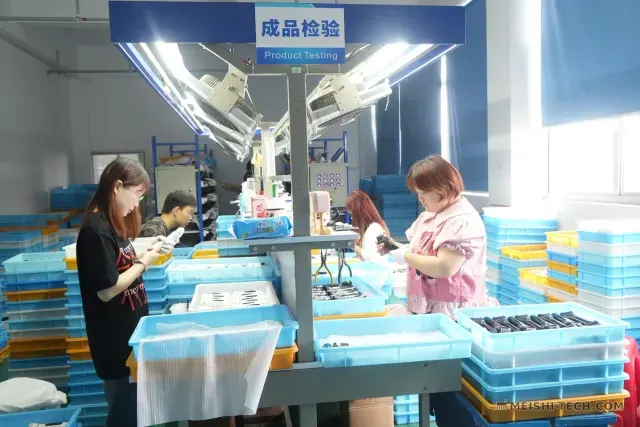
Trading companies have their place, but for a branded grooming line you want direct access to production. Ask for the factory address, floor area, number of production lines and photos or video of the assembly floor. Check which steps happen in-house — assembly, battery installation, charging tests, packing — and which are outsourced. A video call walking the line tells you more than any brochure.
For reference, our own factory profile lists a 9,000 m² facility in Wenzhou, Zhejiang, with 4 assembly lines and an in-house quality team.
2. Check category focus and the real catalog
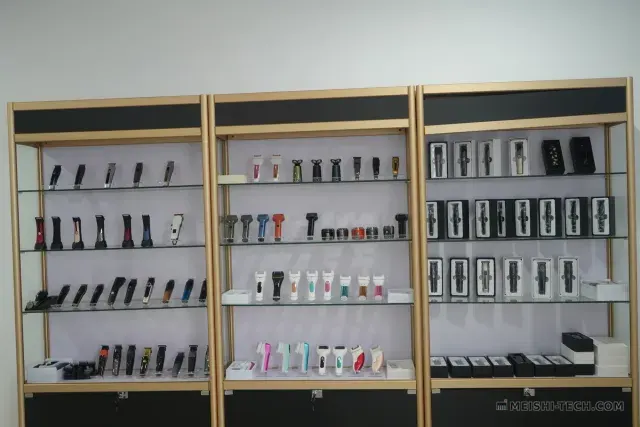
A factory that specializes in rechargeable grooming products will understand blade geometry, motor tuning and battery behavior far better than a general electronics supplier. Look for a coherent catalog — hair trimmers, grooming kits, body groomers, barber clippers, shavers — with published specifications such as battery capacity, charging time, runtime and waterproof rating. Vague or missing specs are a warning sign.
3. Ask how batteries and charging are validated
Battery and charging problems are the main source of returns for cordless clippers. Ask specifically: Is every unit charge-tested? Is there a battery aging test, and how many cycles? How is claimed runtime measured? A capable supplier answers these without hesitation and can show the test equipment.
4. Review the quality control system end to end
Request a description of the full QC flow: incoming materials, in-process checks, functional tests, final inspection and pre-shipment AQL sampling — plus a sample inspection report. Our quality control checklist explains what each stage should cover.
5. Test OEM/ODM responsiveness with a small brief
Send a short, specific brief: one or two models, logo method, packaging type, target market and quantity range. Then judge the response. Did they ask clarifying questions? Did they suggest suitable models? Did they explain what can be customized without new tooling? The quality of this first exchange is a reliable preview of how a bulk order will run.
6. Look for export experience and market configuration
A manufacturer that already ships to your region will understand plug types, voltage, manual languages and labeling. Ask which markets they export to and which documents they can provide per model — and read our certification guide so you know what to request.
7. Agree on samples, documentation and communication
Before you pay a deposit, align on the sample approval process, the inspection standard, payment terms and who your day-to-day contact will be. A dedicated export contact who replies clearly and quickly is worth a great deal over the life of a program.
Red flags to watch for
- Prices far below the market with no explanation of specification differences.
- Reluctance to show the production floor or provide test records.
- Spec sheets that change between quotation and sample.
- Unverifiable certification claims, or certificates issued for a different model.
- "Yes" to every request without questions about your market or volumes.
Why importers choose Wenzhou Meishi
Wenzhou is one of China's established production regions for small personal-care appliances, with a deep local supply chain for motors, blades and plastics. Wenzhou Meishi Technology builds on that base with a focused range of rechargeable grooming products, a defined 8-step quality control process, flexible OEM/ODM service and exports to 40+ countries and regions.
If you are shortlisting suppliers, we invite you to put us through this checklist. Send us your inquiry with your target products and market — we will reply with recommendations, a quotation and a sample plan, and we are happy to arrange a video tour of our production lines.
Frequently asked questions
How can I tell if a Chinese supplier is a real factory?
Ask for the factory address, floor area, production lines and a live video walk-through of assembly and testing. Check which processes are done in-house and request recent inspection records.
What should I ask a hair clipper manufacturer about batteries?
Ask whether every unit is charge-tested, whether battery aging tests are performed, how runtime is measured, and which cell model is used, along with its UN38.3 and SDS documents.
Should I choose the cheapest hair clipper supplier?
Not on price alone. Differences in battery cells, blades and QC often explain lower prices and lead to higher return rates. Compare total cost including quality, communication and reliability.
Where are hair clippers manufactured in China?
Production is concentrated in eastern and southern manufacturing regions, including Zhejiang Province, where Wenzhou has a long-established personal-care appliance supply chain.